
Rifleman Jaswant Singh Rawat, 21, received the Mahavir Chakra in the 1962 War with China. Such was his valour that a temple and museum stands on the land he died defending in the icy valley of Arunachal Pradesh.

'Why isn't the story of the valiant 13th Kumaon a part of every child's textbooks?' 'Why have we let these brave men die unwept, unmourned, and unsung?' asks Rajeev Srinivasan.
In super-human acts of valour, Havildar Abdul Hamid personally knocked out five tanks over two days, effectively derailing the enemy offensive in the 1965 Indo-Pak War. 'Decades later, I realised not only how much the nation owed to this great son of India but also that my entire family was probably alive thanks to him,' says Vijay Dandapani.

'It would not be incorrect to say that the Chinese-Pakistani strategy of containing India began in the aftermath of the 1965 war.'

True Indian scenes most often lie on less travelled routes, along roads that have fallen off the map, after modern highways have come up. On the fourth leg of their 2,148 km journey, Rediff.com's Archana Masih and photographer Rajesh Karkera discover one such forgotten place in the Thar Desert.

'Pakistan's recent utterances and tendency to use pinpricks to try our patience appear reminiscent of 1965. We are a strong nation, emerging stronger,' says Lieutenant General Syed Ata Hasnain (retd).
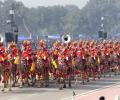
President Droupadi Murmu will lead the nation in celebrating the Republic Day, and Egypt's President Abdel Fattah al-Sisi will be the chief guest at the ceremonial event.

50 years after the 1965 War, India still thinks we can have a 'limited war' when our opponent has time and again shown it does not believe in a limited war, says Colonel Anil A Athale (retd).

All equipment from the Army which were part of the Republic Day celebrations are made-in-India, Chief of Staff Delhi Area Maj Gen Bhavnish Kumar had earlier said.

When Rediff.com's Archana Masih and Rajesh Karkera set course from the foothills of the Himalayas to the Arabian Sea, they could not think of a better place to begin their journey than the stately campus that has given India some of its greatest military heroes.

'We will see footfall returning to pre-COVID levels by January.'
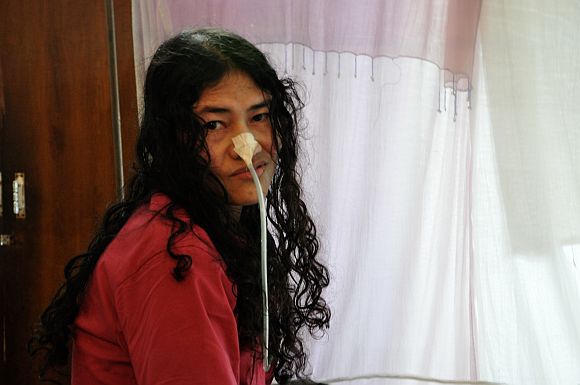
Tubes gone, Irom Sharmila the brand is dead. As long as she was trying to kill herself, she had value to the cynics trying to build their careers over her fast, says Shekhar Gupta.

'We were firing at Patton tanks that were moving towards India.' 'Fighter aircraft are the biggest menace for tanks because they come at great speed, attack from a height and their rockets are lethal.' 'The Hunter travels at 400, 420 knots. One knot is 1.6 times a km, so it was at a speed of 700, 800 km/hr.' 'You come at great speed and when you see the tanks, you pull up because attacks are always done in a dive.' 'You go up to 3,000 to 4,000 feet and then dive on to the target and let off your rockets...'

Glimpses of the final days of the 1965 War, as seen from the diary then defence minister Y B Chavan maintained during the war.

'We don't know what the reasons were that we gave back the Haji Pir Pass which was strategically very important. Today the entire infiltration into Kashmir takes place from that area. If we had retained that post that we had captured, things could have been different.' 'A lesson we need to learn is if you start losing the gains of war at the negotiating table, they become a disincentive for future wars,' says Lieutenant General D B Shekatkar (retd), reviewing the lessons from the 1965 War.

'The Indian Air Force wanted to fight. My squadron leaders and flight lieutenants, all of us were eager to fight. Unless they are keen I can't have confidence.' Marshal of the Air Force, the legendary Arjan Singh, on the 1965 War.
Lieutenant General Harbakhsh Singh, GOC, Western Command, disobeyed the then army chief and took on a superior Pakistani armoured column. The Indian Centurion tanks outgunned the more modern Pakistani Patton tanks in the battle at Khem Karan, that proved the turning point of the 1965 War. Brigadier Gurmeet Kanwal (retd) salutes the Soldiers' General.

'A close look at the time-lines tells you that exactly as the back-channel negotiations were in their most crucial stage, "somebody" was planning the 26/11 attacks in Mumbai,' says Shekhar Gupta questioning Khurshid Mahmud Kasuri's account of a peace deal with India.

Sena president Uddhav Thackeray on Thursday attacked the coalition partner on issues like Pakistan, beef, Ram temple and inflation but ruled out walking out of the Maharashtra government any time soon.
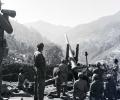
Fifty years ago, India and Pakistan fought a short but bloody war. The author finds out how Sainik Samachar, the defence ministry's journal, reported it.
